
Why skylights leak: the usual causes and what to check first
By Priya Vogel, Editorial Lead · Updated 2026-09-22
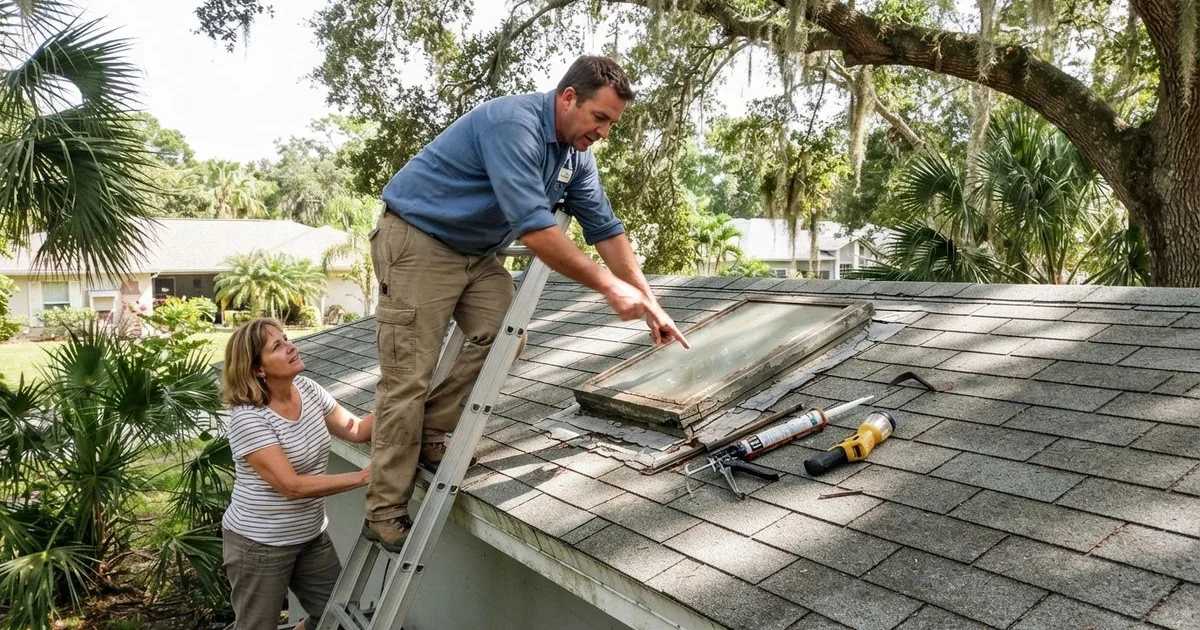
Leaking skylights are a common reason people go looking for a contractor, and most are not what they first look like. The leak you see inside is often several steps from the entry point on the roof. Sorting the likely cause first helps you describe the problem accurately and judge the answer you get.
Start with when it happens
The timing of the drip is the best clue you have.
| What you notice | Likely cause |
|---|---|
| Drips only during heavy, wind-driven rain | Flashing or curb detail |
| Drips after any rain | Failed flashing, cracked glazing, or damaged sealant |
| Water drops on the glass in the morning, no staining | Condensation |
| Fog trapped between two panes | Glazing seal failure |
| Stain that spreads slowly with no rain | Possibly a plumbing, HVAC, or attic issue, not the skylight |
The four usual suspects
Flashing
Flashing is the metal or membrane that seals the joint between the unit and the roof. When it is installed badly, bent, or aged out, water finds the gap. Many leaks that get blamed on the skylight are really flashing failures.
Sealant and tape
Sealants dry, crack, and pull away under Florida sun. A fresh bead can be a legitimate maintenance fix, but repeated re-caulking on the same spot is a sign the underlying detail is wrong.
Seal failure in the glass
When the sealed edge of a double-pane unit fails, moisture gets between the panes. It looks like fog you cannot wipe off. It is not a roof leak, but it is a sign the unit is aging.
Condensation
Humidity indoors meets a cool surface. This is common in bathrooms and kitchens, and it responds to ventilation rather than roofing work.
What to check safely
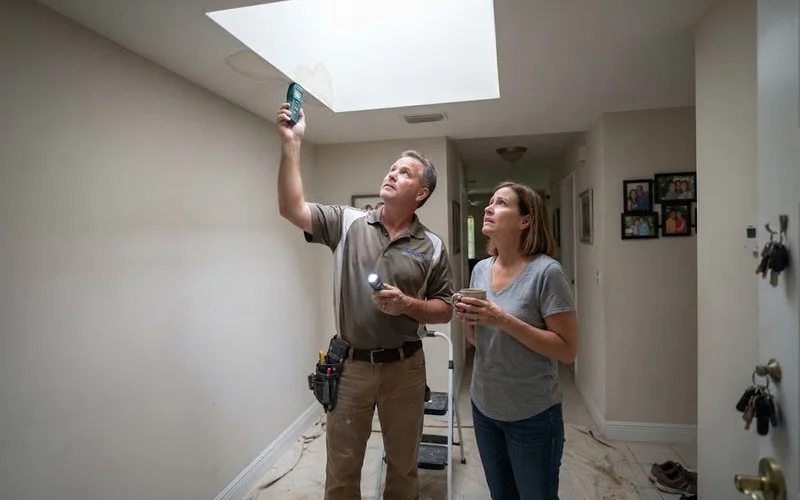
From the ground and from inside, you can look at the ceiling, the shaft, and the attic if it is accessible and safe. Note when the leak appears, where the stain starts, and whether the glass is fogged. Take photos. You do not need to climb on the roof to collect that information, and a roof is a real fall hazard, especially when wet.
What a good inspection covers
A contractor should look at the flashing, the curb, the glazing, the roof material around the unit, and the interior. They should be able to tell you what failed and whether the answer is a repair or a replacement. In the reviews we read for local contractors, people repeatedly credit fast response to calls and leaks, and clear explanations. Those are reasonable things to expect.
If the cause looks like a repair, the skylight repair and leak fixing category lists local businesses that handle it. How we assess them is in our rubric.
Protect the house while you wait
Move belongings, put a container under the drip, and open the ceiling only if a professional advises it. Ask your insurer about notice requirements early, and see whether homeowners insurance covers skylight leak damage before you pay for repairs. Our broader directory home page has the full list of services.
This is general information, not an inspection or professional advice.
Questions people ask
- Is the water I see a leak or condensation?
- Condensation forms as droplets on the glass or frame, often on cool mornings or humid days, and does not stain the ceiling around the shaft. A leak leaves a stain or drip that grows after rain.
- Can I fix a leaking skylight with sealant myself?
- Sealant may slow a minor edge leak, but caulk over failed flashing usually hides the problem for a short time. Working on a roof is also a fall risk, so many homeowners leave it to a pro.
- Why does my skylight only leak in heavy storms?
- Wind-driven rain can push water past flashing that sheds normal rain fine. That points to a flashing or curb detail, not the glass.
- How soon should a leak be looked at?
- Sooner is better, since water that gets into the roof deck and insulation can cause hidden damage. Place a container, protect the floor, and get an inspection.